admin
admin How to Treat Softening Starting High on Braided Money Tree Trunks
You notice the braided trunk feels soft near the top, and panic sets in. Here is the short answer: softness high on the trunk means rot is moving downward from a wound or a wet crown. The fix is to cut below the soft spot immediately, repot the healthy top as a cutting, and fix your watering. I did this two weeks ago, and my plant is already pushing new roots.
If you catch it early, you can save the whole canopy. If you wait, the rot travels down the braids and kills the roots. I have lost two money trees to this exact problem. The third one taught me everything I need to know.
Why the Soft Spot Appears Up High
Most people assume trunk rot starts at the soil line. It does not. The top of the trunk is a common entry point for bacteria and fungus because that is where leaves were pruned, where a branch broke, or where water pooled after misting.
The Real Cause Is Water Trapped in the Crown
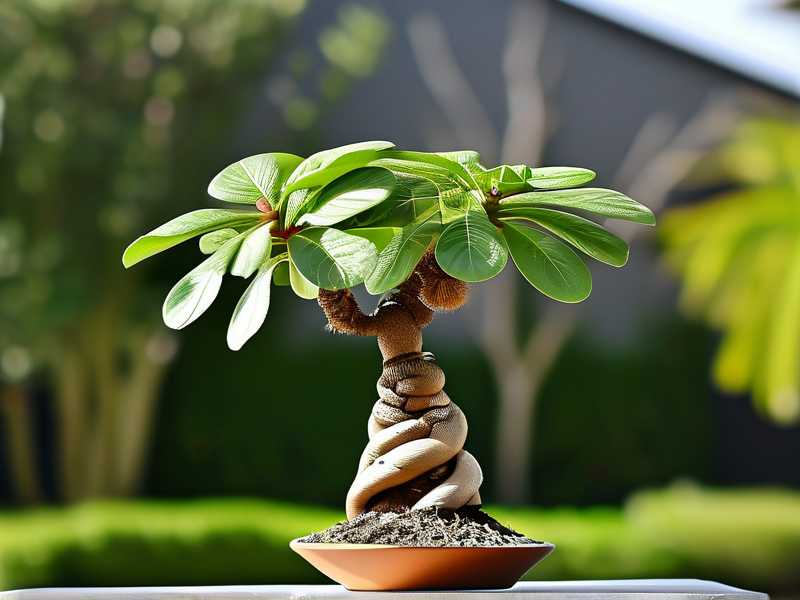
When you water your money tree, do you pour water directly onto the trunk? I did for months. The braided grooves hold water like tiny cups. That moisture sits against the bark for days. The bark softens. Then the cambium layer underneath starts to break down.
Within a week, you get that mushy spot near the top. It feels spongy. It might even ooze a little if you press it. That is rot.
The Infection Spreads Downward Through the Braids
Money tree trunks are not solid wood like an oak. They are multiple stems braided together when young. As they grow, they fuse in places but leave gaps. Those gaps are perfect channels for moisture to travel. Once rot starts high, it moves down through the gaps. You will not see it from the outside until the whole trunk collapses.
My 2-Week Recovery Process Step by Step
I noticed the soft spot on a Thursday evening. The top of the main trunk felt like a ripe avocado near the second braid. The leaves above it were still green, but the stem connection felt weak. I acted the next morning.
Step 1: I Stopped Watering Immediately
The first thing I did was stop all watering. No misting, no flushing, nothing. The soil was still moist from my last watering four days prior. Adding more water would only speed up the rot. The roots needed to dry out just as much as the trunk.
Step 2: I Sterilized My Knife and Made the Cut
I used a sharp grafting knife and wiped the blade with rubbing alcohol. Then I cut straight through the trunk about 2 inches below the soft spot. The cut line was clean. The tissue inside was still white and firm.
If the inside looks brown or black, you have to go lower. Cut again until you hit clean white tissue. I learned this the hard way when I tried to save a branch with brown centers. It just rotted again.
Step 3: I Sealed the Fresh Cut
I dipped the cut end in cinnamon powder. Cinnamon is a natural antifungal. It protects the open wound from spores while it calluses over. I have used this trick on all my cuttings, and it works.
Let the cut end dry in open air for about 2 hours before you put it in water or soil. A fresh wet cut sitting in damp media is a direct invitation for rot.
Step 4: I Rooted the Top in Plain Water
I filled a glass jar with filtered water and placed the cut top in it. The leaves stayed above the rim. I set it in bright, indirect light. Not direct sun. Direct sun at this stage will cook the cutting.
I changed the water every 3 days. I did not add any fertilizer. Feeding a cutting with no roots burns the stem.
Step 5: I Checked the Remaining Trunk for Spread
While the top rooted, I examined the remaining lower trunk. The soft spot had been removed, but I wanted to make sure the rot had not already tunneled down. I gently pressed the trunk at several points. It was firm.
Then I unpotted the stump and checked the roots. The roots were dark and mushy at the tips. That told me I had been overwatering for a while. I trimmed off the damaged roots, repotted the stump in fresh cactus mix, and reduced watering to once every 10 days.
What I Observed After 2 Weeks
By day 5, the cutting in water had a tiny white nub at the base. By day 10, that nub had grown into three small roots about half an inch long. By day 14, the roots were branching out, and the top leaves had perked up.
The lower stump also showed new growth. Two small green buds appeared at the base. It was not dead, but it was still too early to call it fully recovered. The trunk firmness was back to normal, and no new soft areas developed.
The 3 Deadly Mistakes That Started All This
I would not be writing this if I had not made three big errors in the first place. These mistakes are so common that the majority of money tree owners do at least one of them without knowing.
① Overwatering the Trunk and Soil
90% of indoor plants die from overwatering. Money trees are extra sensitive because their trunks store water naturally. The roots do not need constant moisture.
I used to water mine twice a week because the topsoil looked dry. Big mistake. Bone dry in the top inch does not mean dry in the middle of the pot. The bottom stayed wet, the roots sat in soggy soil, and the whole plant became weak. When I finally cut the trunk open, the inside was discolored near the base.
The fix is simple. Use a wooden skewer and poke it all the way to the bottom. Leave it for 5 minutes. Pull it out. If the wood feels damp past the top 2 inches, do not water. If the wood is completely dry, water thoroughly.
② Wrong Light Position
I had my money tree in a corner that only received weak morning light. In low light, the plant slows down all its biological processes. It does not drink water as fast. The soil stays wet longer. That wet soil promotes root rot, which weakens the trunk.
I moved the plant to a spot with bright, filtered light near an east window. The difference showed in two weeks. The leaves got bigger, the soil dried out faster, and the trunk felt harder. Money trees want light, but not direct midday sun which scorches the leaves.
Think of it this way: the plant is like a sponge. Light dries the sponge. No light, the sponge stays soggy.
③ The Wrong Pot with No Drainage
I remember telling myself that a decorative ceramic pot without drainage holes would be fine as long as I was careful. I was not careful. Water pooled at the bottom, invisible to me. The roots stayed wet for weeks.
I swapped it to a terracotta pot with a drainage hole. Terracotta wicks moisture out of the soil, which is perfect for a plant that hates wet feet. I also added a layer of pebbles at the bottom. Actually, the pebbles are not as helpful as people think. They can actually raise the water table higher. The real fix is the drainage hole plus a well-draining soil mix.
Use a pot that is only 1-2 inches wider than the root ball. A huge pot holds too much soil, and that extra soil stays wet too long. The roots have to grow into wet regions before the soil dries, and that is a recipe for trunk softening.
My Personal Guide to Cutting Off the Softened Trunk
I have done this procedure twice now. The first time I was hesitant and left too much of the soft area. I paid for it. Let me walk you through the exact steps I use now, so you avoid my hesitation.
Preparing the Tools You Actually Need
You need a knife that is sharp enough to slice through a pencil without breaking it. A dull knife crushes the trunk tissue, making the wound worse. I use a box cutter with a fresh blade every time.
Rubbing alcohol or isopropyl alcohol to sterilize. Do not skip this. You are about to create a wound, and any bacteria on the blade will enter the trunk.
Cinnamon powder or a commercial fungicide. Cinnamon is great for emergencies because you probably have it in the kitchen.
A sterile paper towel to wipe the blade between cuts.
Making the Cut Without Panicking
Hold the trunk firmly with one hand. Feel for the transition from soft to hard. Put your blade about 1 inch below the firm area. Make a single clean cut. Do not saw back and forth. Sawing crushes the fibers.
Then look at the cross-section. White or pale green is good. Brown, black, or grey with a wet look means you need to go lower. Wipe the blade with alcohol, cut another inch below, and check again.
I had to cut three times on my first attempt. I kept finding brown centers. I finally got clean white tissue, but I lost a lot of stem length. The leaves fell off most of the lower stem, and only the top compact head survived. That was fine. A full head is easier to root than a long bare stem.
After the Cut, Do Not Panic About Rooting
You can root the cutting in water or directly in soil. I prefer water because I can see progress. You just need a jar, filtered water, and patience.
Put the cutting in the jar with the cut end about an inch below the water surface. Put the jar in bright but indirect light. Change the water every 3 days.
You should see roots in 1 to 4 weeks. Do not tug at the stem to check roots. That breaks the fresh root tips. Instead, look at the water. When you see branched white roots, it is ready for potting.
Once those roots reach about 2 inches, transplant into a small pot with well-draining soil. Keep the soil slightly moist but never soggy for the first 2 weeks. After that, switch to the normal dry-down cycle.
The Deeper Issue: Soil Mix That Prevents Rot
Even if you fix the current soft spot, the problem will return if your soil is wrong. Money trees do not like standard potting soil straight from the bag. It holds too much water.
My Custom Cheap Mix
I use one part regular potting soil, one part perlite, and one part orchid bark. The orchid bark creates air pockets. The perlite helps drainage. The result is a mix that holds moisture but releases most of it.
The RHS recommends using a free-draining houseplant compost for most tropical species. That advice is spot on. Money trees are tropical, but they naturally grow in rocky, well-aerated soils, not swampy riverbanks.
If you do not have bark, you can use cactus mix mixed with regular potting soil at a 50:50 ratio. It works in a pinch.
Repotting Steps That Minimize Shock
Water the plant two days before you repot. Dry plants suffer more root damage. Then gently pull the plant out of the pot. Shake off the old soil carefully. Do not wash the roots under running water, because that breaks the tiny root hairs.
Cut off any black or mushy roots with sterile scissors. Dip the remaining healthy roots in a diluted hydrogen peroxide solution (one part peroxide to three parts water) to kill fungus. Let the roots air dry for 30 minutes.
Put a layer of your new mix in the pot, place the plant, and fill around the sides. Tap the pot lightly to settle the soil. Do not press the soil down hard. You want air pockets.
Water once thoroughly and let it drain. Then wait for the top 2 inches of soil to dry before watering again.
Fungus and Bacterial Infections You Cannot See
Sometimes the soft spot is not just physical damage. It is a fungal infection like Phytophthora or bacteria like Erwinia. These pathogens thrive in wet and warm environments.
How to Tell the Difference
If the soft spot smells like rotten vegetable, that is bacterial. Bacteria produce a nasty odor. Fungus smells more like musty soil, and you may see white or grey fluffy growth on the bark.
In both cases, cut off the infected part. Then apply a fungicide like copper spray to the wound. The AHS suggests that copper-based fungicides are effective on many ornamental plants, but be careful with dosage. Too much copper burns the plant.
Environmental Humidity and Air Circulation
High humidity plus stagnant air is an invitation for fungus. I had my money tree in a bathroom for a while. Big mistake. The steam from every shower left the trunk damp for hours. It was only a matter of time before the top started softening.
Move your plant to a room with steady air movement. An oscillating fan on low for a few hours a day helps a lot. Not directly blowing on the plant, but in the same room. This dries the surface of the trunk and prevents spores from settling.
How to Structure Watering Going Forward
Most people water on a schedule. That is wrong. You water when the plant needs it, which depends on light, temperature, humidity, and season.
My Simple Guideline
- In summer: water every 7 to 10 days
- In winter: water every 14 to 20 days
- In low light: always lean toward less water
- In high light: check soil moisture more often
I stick my finger in the soil up to the second knuckle. If it feels dry, I water. If it feels cool and damp, I wait. This method has kept my braided trunk firm for the past 8 months.
Signs of Proper Hydration
The leaves should be stiff and pointing outward. The trunk should feel hard when you press it. If leaves start curling inward or the trunk feels slightly springy, you are overwatering. Cut back immediately.
Long Term Vigilance and Trunk Health
Even after recovery, I check the trunk once a week. I run my fingers along the braids, especially the top 3 inches. That is the highest risk area.
The $3 Moisture Meter Trick
You can buy a cheap moisture meter for about ten dollars. Stick it deep into the soil near the trunk. If the needle stays in the red zone, do not water. If it sits in the dry zone, water thoroughly.
I actually keep one near my money tree. It has saved me from overwatering more often than I want to admit. Honestly, a moisture meter is one of the best tools for any plant owner.
What to Do If the Entire Top Goes Mushy
If the softness extends all the way to the top leaves and the leaves are already dropping, you need to cut back even more drastically. You may be left with nothing but a bare stump. That stump is still valuable.
I had a bare stump that sat for 3 months with no leaves. I almost threw it away. Then one day, a tiny green bud appeared at the base. That stump is now a full bushy plant again. Patience is part of the game.
Common Questions and My Straight Answers
Q: Can I save a money tree if the trunk is soft down to the soil level?
You probably cannot save the main trunk, but the roots may still be alive. Cut the trunk down to the soil line, stop watering, and wait. Sometimes the roots push out new shoots. It is not guaranteed, but it is worth a try. I saw my friend do this and the stump sprouted after a month.
Q: Is banana peel water good for rigid trunks?
No. The idea that banana water fixes trunk strength is a myth. Trunk firmness comes from healthy roots and proper hydration, not from potassium supplements in the water. I tried banana peel water on one plant. All I got was fungus gnats and a smelly pot. Use balanced liquid fertilizer diluted to half strength during the growing season instead.
Q: How long does it take for a money tree trunk to harden after fixing the roots?
It depends. If you caught it early and changed the watering habits, about 2 weeks. If you had to cut off a significant portion of the roots, expect 1 to 2 months. The trunk hardens as the roots repair and push water back up. During this time, the plant cannot support a lot of leaves. Remove some foliage to help the plant recover faster.