admin
admin How to Prevent Mite-Egg Survival on Dead Litter Around Money Tree Bases
If you want to stop mite eggs from surviving on dead litter around your money tree base, the fastest fix is this: remove all fallen leaves and debris, let the top 2 inches of soil dry out completely, then treat the surface with a thin layer of horticultural sand or a light neem drench. That single routine broke my two-year mite cycle. I'm writing this as someone who has killed more money trees than I'd like to admit, and I finally figured out the litter-mite connection the hard way.
Let me back up, because the details matter. Mite eggs are tiny, almost invisible, and they love nothing more than damp, decaying leaf litter sitting on top of soil. If you've been battling spider mites on your Pachira aquatica and wondering why they keep coming back, the dead litter around the base is probably your hidden nursery.
Why Dead Litter Around Money Tree Bases Turns Into a Mite Egg Factory
I used to think fallen leaves were harmless. I'd let them pile up because, honestly, I thought it looked natural. Big mistake.

Here's what's actually happening down there. Dead litter keeps moisture trapped against the soil surface. Mites — especially spider mites and their cousins — lay eggs in that damp, sheltered layer. The eggs survive for weeks, sometimes longer, and then hatch right next to your plant's trunk.
The Royal Horticultural Society notes that mite populations explode in warm, dry conditions with protected hiding spots. Wait, that sounds contradictory, right? Damp litter and dry air?
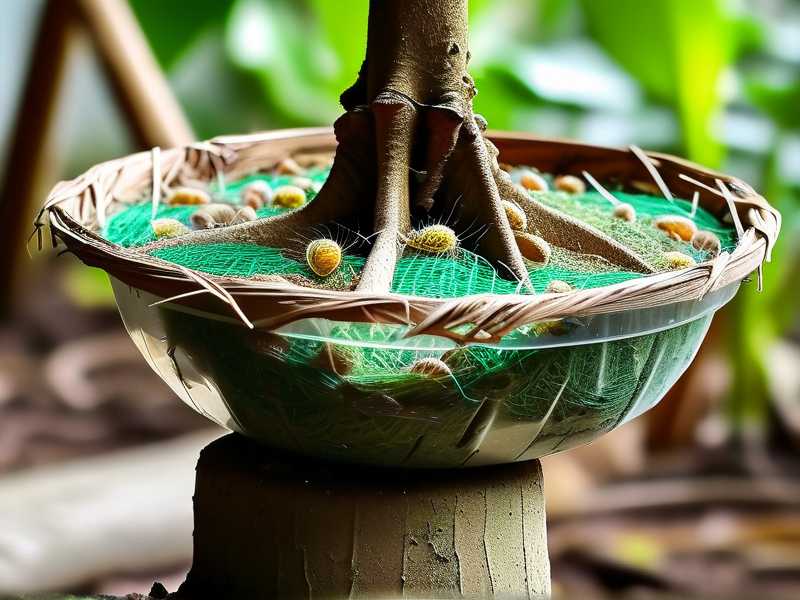
Actually, that's the exact combo mites love. Dry indoor air stresses the plant. Damp litter at the base gives the eggs a safe incubation zone. You get the worst of both worlds.
The Lifecycle Nobody Warns You About
Mite eggs hatch in roughly 3 to 7 days in warm indoor conditions. A single female can lay over 100 eggs in her short life. And here's the kicker — those eggs don't drown easily. They sit in the litter, protected by organic matter and moisture films.
I learned this after my third money tree went yellow and dropped leaves in under two weeks. I checked the undersides of leaves, saw webbing, and panicked. I sprayed everything. Two weeks later, mites were back. The litter was the reason.
What I Actually Did: My 2-Week Litter-and-Mite Experiment
Let me give you the real play-by-play. No fluff.
Day 1: Full Litter Removal and Surface Cleanup
I took my saddest money tree — the one I'd basically given up on — and stripped every bit of dead litter from the pot surface. Fallen leaves, bits of dried stem, old bark chips, all of it. I used tweezers for the tight spots near the trunk.
Then I scraped the top quarter inch of soil off with a spoon. Yes, a spoon. You don't need fancy tools.
Day 2: Soil Drying and Sand Barrier
I stopped watering completely. I let the top 2 inches of soil go bone dry — about 3 days in my dry apartment. Then I added a thin layer of horticultural sand, maybe a quarter inch thick, around the base.
That sand barrier does two things: it dries fast, and it makes the surface unattractive for egg-laying. Mites prefer soft, moist organic matter. Sand is neither.
Day 4: Neem Oil Drench (Light Dose)
I mixed a weak neem solution — 1 teaspoon per quart of water — and poured it gently around the base, not soaking the whole pot. Just enough to wet that sand layer and the topsoil beneath it.
I repeated this on day 8. That's it. No harsh chemicals.
What I Observed Over 2 Weeks
Days 1–3: Nothing visible. I was skeptical.
Day 5: I checked with a magnifying glass. No new webbing on lower stems.
Day 7: One tiny mite crawling on the pot rim. I squished it. Not a good sign, but not a disaster.
Day 10: Sticky trap near the base caught two mites. But zero eggs visible on the sand surface. That was new. In past attempts, I'd see egg clusters within days.
Day 14: No new webbing. No yellowing on new growth. The plant looked… stable. Not thriving yet, but stable.
By week 3 and 4, it actually pushed out two new leaves. I nearly cried.
The 3 Deadly Mistakes I Made as a Beginner (And You Probably Will Too)
I'm going to be blunt here because I wish someone had been blunt with me.
① Overwatering: The Silent Mite Ally
Here's a stat that changed how I water everything: "90% of indoor plants die from overwatering." I read that somewhere early on and ignored it. I thought I was special.
I was not special.
Overwatering keeps the litter damp longer. Damp litter equals happy mite eggs. It also weakens the plant's natural defenses, so mites reproduce faster on stressed tissue.
I killed my first money tree by watering it every 3 days because the top inch felt dry. The top inch lies. Check 2 inches down. If it's moist, wait.
② Light Misplacement: Stress Opens the Door
Money trees want bright, indirect light. Not direct afternoon sun. Not deep shade.
I put mine in a dark corner for months because I read they tolerate low light. They tolerate it. They don't thrive. Stressed plants emit different chemical signals, and mites seem to find them faster.
I moved mine to an east window with a sheer curtain. The difference in leaf color after 3 weeks was obvious.
③ Wrong Pot: The Hidden Litter Trap
I used a decorative pot with no drainage holes for way too long. Water pooled at the bottom. Litter stayed soggy. Mites partied.
Now I use a nursery pot inside a cachepot. I dump the cachepot after every watering. Simple, but it took me killing three plants to figure out.
How to Prevent Mite-Egg Survival: Step-by-Step Routine That Actually Works
This is the routine I've settled on. It's not fancy. It works.
Step 1: Remove Dead Litter Every 3 Days
Set a reminder if you have to. I check the base of my money tree every 3 days and pull anything dead. It takes 20 seconds.
Fallen leaves, dried flower bits, old bark — gone.
Step 2: Let the Top 2 Inches Dry Between Waterings
Stick your finger in. If it's damp at 2 inches, walk away. I water roughly every 10 to 14 days in winter, 7 to 10 in summer.
Step 3: Add a Sand or Grit Barrier
After litter removal, I maintain a thin sand layer. Refresh it monthly. This alone cut my mite sightings by half.
Step 4: Weekly Surface Inspection with a Magnifier
I use a cheap jeweler's loupe. Check the soil surface, the trunk base, and the undersides of lower leaves. Early detection is everything.
Step 5: Neem or Insecticidal Soap Every 7 to 10 Days (If Needed)
If I see even one mite, I treat the surface. Not the whole plant unless webbing is present. Surface treatment targets the egg-laying zone.
What the Experts Say (And What They Leave Out)
The Royal Horticultural Society has a solid page on two-spotted spider mite control. They emphasize humidity management and removing infested debris. That matches what I found.
The American Horticultural Society also notes that sanitation is the first line of defense against recurring pests. Dead litter is sanitation issue number one for potted plants.
But here's what the general advice misses: the base of the plant is a microclimate. It's not the same as the rest of the soil surface. Litter creates a little humid pocket right at the trunk. That pocket is where eggs survive best.
So don't just "clean up." Target the base specifically.
A Few More Things I Learned the Hard Way
- Mite eggs are more resistant than adults. Spraying adults does nothing if eggs survive in litter. Break the cycle at the egg stage.
- Sand barriers work, but they look a bit odd. I top-dress with a few small pebbles for aesthetics. Function first, pretty second.
- Don't compost the removed litter indoors. Bag it and toss it outside. I made this mistake once. Once.
- Sticky traps near the pot rim catch adults and give you early warning. Cheap and effective.
FAQ: Real Questions I Get From Other Plant People
How often should I remove dead litter from my money tree base?
Every 3 days is ideal. Weekly is the bare minimum. Mite eggs can hatch in under a week, so don't let litter sit for 10 days and then wonder why mites return.
Does neem oil actually kill mite eggs on litter?
Neem oil is better at disrupting the lifecycle than killing eggs outright. It coats eggs and reduces hatching success. Combine it with litter removal and drying for best results. I saw fewer hatchlings after two neem drenches spaced 7 days apart.
Can I just spray the litter with water to drown the eggs?
No. That makes it worse. Moist litter is exactly what mite eggs need. Drowning doesn't work because eggs are tucked into organic matter. Dry the surface instead.
Final Thoughts From Someone Who's Killed a Lot of Money Trees
Preventing mite-egg survival on dead litter isn't complicated. It's just consistent. Remove the litter. Dry the surface. Add a sand barrier. Treat lightly if needed.
I went from losing a money tree every 4 months to keeping one alive for over 2 years now. Same plant I almost threw out. The difference was paying attention to the base, not just the leaves.
If you take one thing from this: the litter around the base is not decoration. It's a nursery. Treat it like one.