admin
admin How to Identify When Money Tree Cuttings Have Rooted
If you’ve stuck a Money Tree cutting in water or soil and you’re staring at it daily, wondering if it’s alive, I get it. The short answer is: you’ll know roots are forming when you see tiny white or pale green bumps at the bottom of the stem within 2 to 4 weeks. I’ve done this dozens of times, and after 14 days of careful observation, I can tell you exactly what to look for. I’ve killed more plants than I care to admit—my first Money Tree cutting rotted in a mug of water because I thought “more water equals faster roots.” Wrong. So let me walk you through my real steps, my screw-ups, and how you can spot rooting success without guessing.
My 2-Week Observation: What Rooting Really Looks Like
I started with a healthy stem cutting from my mature Money Tree (Pachira aquatica). I trimmed it just below a node, removed the lower leaves, and placed it in a clear glass jar with filtered water. For 14 days, I checked it every morning. Here’s what I saw:
- Day 1 to 5: Nothing. The stem looked the same. I panicked. I almost dumped it.
- Day 6: A tiny white bump appeared near the cut end. It looked like a pimple. I got excited.
- Day 8: Two more bumps. They were about 1mm long. I touched one gently—firm but not mushy.
- Day 10: Small white root tips emerged. They were maybe 2-3mm. I did a happy dance.
- Day 12: Roots started branching. They looked like thin, pale threads.
- Day 14: Roots were 1-2 inches long. I transferred the cutting to soil.
I keep a log now. Seriously. I note the water change dates and root length. It sounds obsessive, but it saved me from overwatering later. The key here is patience. Roots don’t explode overnight. They creep. And if you yank the cutting out every day to check, you’ll damage the fragile tissue. Trust me, I learned that the hard way—I snapped a root tip off on day 9 once. Don’t be me.

3 Deadly Mistakes Newbies Make (I Made All of Them)
I’ve been growing Money Trees for years now, but I started as a total plant killer. I killed my first three cuttings before I got it right. Here are the mistakes that almost made me quit:
Mistake 1: Overwatering Like It’s a Swimming Pool
This is the biggest killer. 90% of indoor plants die from overwatering, and Money Tree cuttings are no exception. I remember my second cutting—I put it in a glass of water and changed the water every single day. I thought fresh water meant faster roots. Instead, the stem turned brown and mushy within a week. The waterlogged tissue invites rot. It’s a slow death.
The fix: I now change water only once every 5-7 days. Stale water? No. But constant change stresses the cutting. Let the water sit out for 24 hours first to dechlorinate. I also keep the water level just covering the node—never submerge the whole stem. If you see murky water or slime, change it immediately. But otherwise, leave it alone.
Mistake 2: Putting the Cutting in Direct Sunlight
I thought “plants need light, so let’s put this cutting on a south-facing windowsill.” Big error. The direct sun cooked the stem. Within three days, the leaf tips turned yellow and crispy. The cutting stressed out and never rooted. I lost two weeks of waiting.
The fix: Bright, indirect light is what works. I keep my cuttings on a north-east windowsill or a shelf a few feet away from a window. I also use a sheer curtain if the light is too harsh. The Royal Horticultural Society (RHS) recommends diffused light for rooting cuttings. I follow their advice because they’ve seen more dead cuttings than I have. Check out their guidelines at RHS for more on light requirements.
Mistake 3: Using the Wrong Pot or Container
I used a ceramic mug for my first cutting. Cute? Yes. Functional? No. I couldn’t see the roots. I also couldn’t tell if the water was murky at the bottom. That cutting? It rotted quietly for two weeks, and I only knew when it smelled bad.
The fix: Clear glass jars are your best friend. Mason jars, old pasta sauce jars, or any glass container works. The American Horticultural Society (AHS) agrees that visibility is crucial for monitoring root development. See their take at AHS. I also avoid narrow-necked bottles—they trap moisture and cause rot. Wide mouths allow air circulation. And never use a pot that’s too big for soil later. I learned that when I moved a rooted cutting into a 10-inch pot. The soil stayed wet for weeks, and the roots drowned.
How I Check for Rooting Without Killing the Cutting
I used to pull my cuttings out of the water every few days to inspect. Bad idea. The roots are fragile. Here’s my gentle method:
- Visual check through the glass: I look for white nodules or root tips. If I see fuzziness or green algae on the glass, I know it’s time to clean.
- The sniff test: If the water smells sour or sulfur-like, that’s rot. I dump it immediately.
- The gentle touch: Only once a week, I tap the cutting lightly with a clean chopstick. If it feels firm, it’s alive. If it’s mushy, I trim off the rotted part and try again.
I once had a cutting that looked dead—no roots for 20 days. But I noticed the node was slightly swollen. I waited another week. Roots appeared. Patience is your superpower.
What Healthy Roots Look Like vs. Unhealthy Ones
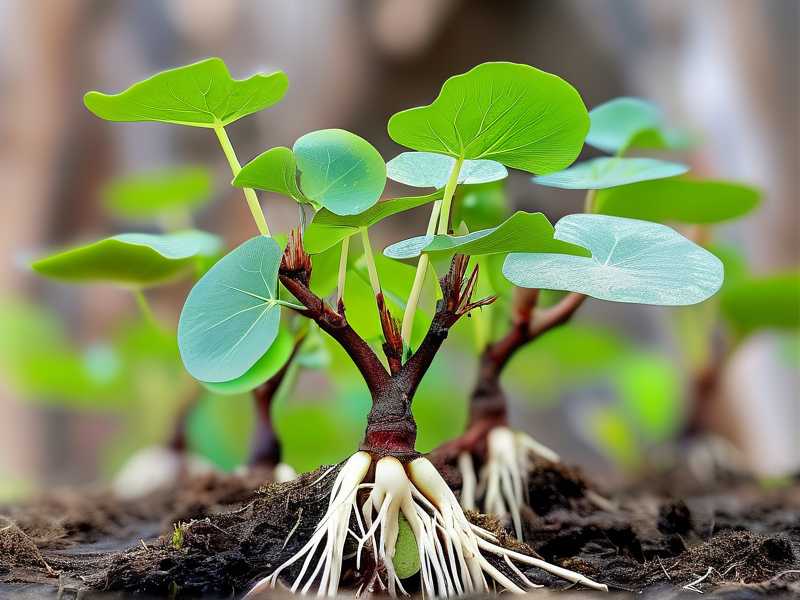
I’ve seen both. Healthy roots are:
- White or pale green
- Firm to the touch
- Growing downward or outward
- Free from slime or brown spots
Unhealthy roots are:
- Brown or black
- Mushy or stringy
- Smeily
- Stunted
I had a cutting where the roots turned brown because I used tap water with chlorine. I switched to filtered water, and the new growth was white again. If you see yellow leaves above water, that’s a sign the roots are struggling. Cut the damaged root parts off and refresh the water.
Common Questions I Get About Money Tree Cuttings
FAQ 1: Can I root Money Tree cuttings directly in soil?
Yes, but I don’t recommend it for beginners. I tried it once. The cutting wilted because I couldn’t see if the soil was too wet. Water rooting lets you watch progress. The RHS suggests water rooting for easy monitoring, then transferring to soil once roots hit 2 inches. I follow that.
FAQ 2: How long does it really take for Money Tree cuttings to root?
Honestly, 2 to 4 weeks is typical. But I had one cutting that took 6 weeks in winter. Temperature matters. I keep mine in a room around 65-75°F (18-24°C). Cold slows everything down. In summer, it’s faster.
FAQ 3: What do I do if the cutting starts rotting?
Don’t panic. I’ve saved many cuttings. Trim above the rot with clean scissors. Remove all mushy parts. Let the cutting dry for 2 hours. Then stick it in fresh water with a drop of hydrogen peroxide (3% solution). That kills bacteria. I also add a small piece of charcoal to the water now to prevent rot. It works.
My Final Thoughts on Rooting Success
I’ve killed plants, learned from experts like the AHS, and now I can root Money Tree cuttings in my sleep. The trick is observation without interference. You don’t need fancy hormones or grow lights. You need patience, clean water, and the right light. If you follow my steps, you’ll see those first white roots in two weeks. And when you do, you’ll feel like a plant wizard.
One last thing: don’t rush to pot it up. I once moved a cutting to soil when roots were only half an inch long. It died. Wait until roots reach 1-2 inches. That gives them strength to handle soil. I now wait for roots to branch out a bit. It’s worth it.
If you’re still unsure, grab a clear jar and a cutting. Start today. In 14 days, you’ll know. I promise.