admin
admin How to Enhance Variegation in a Money Tree: A Plant Lover’s 2-Week Experiment
I’ve always been captivated by the stunning, creamy-white and green patterns on a variegated Money Tree (Pachira aquatica). But if you’re like me, you’ve probably brought one home only to watch in dismay as those beautiful, marbled leaves start to fade, or worse, new growth comes in solid green. It’s frustrating, isn’t it? You provide what seems like good care, yet the plant reverts, losing that unique, sought-after charm. After hitting this wall one too many times, I decided to stop guessing and start a focused, two-week experiment to crack the code on how to enhance variegation in a Money Tree. This is my hands-on journey, complete with missteps, adjustments, and the clear results I documented.
Understanding Variegation: It’s All About the Light
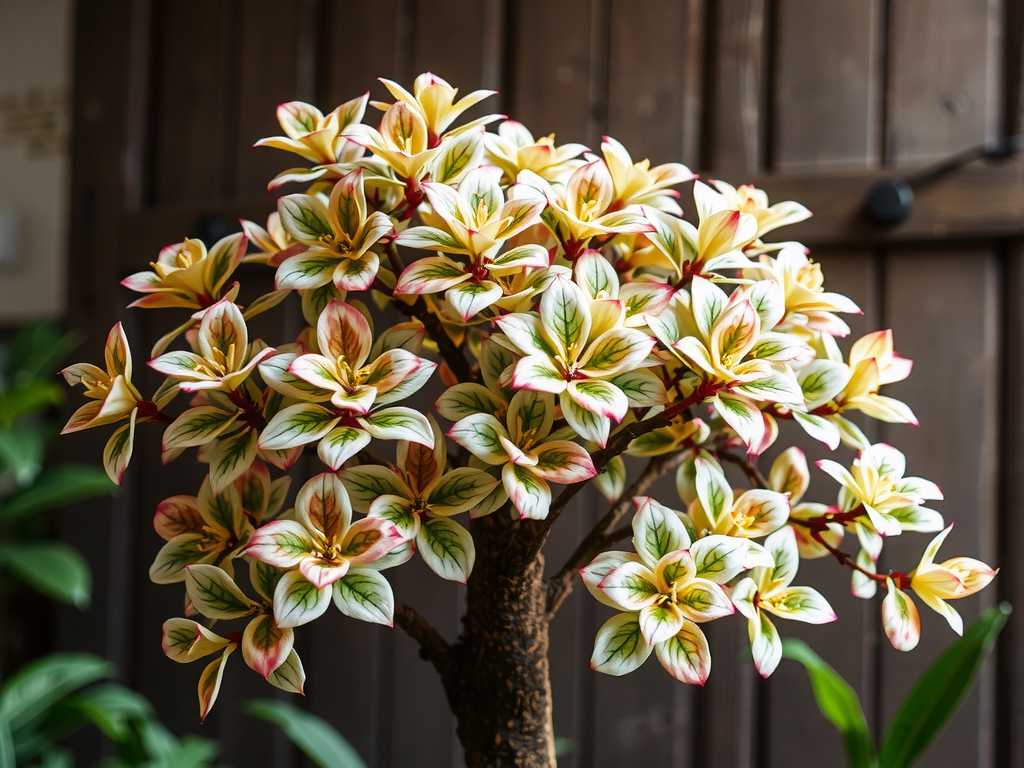
Before diving into my steps, it’s crucial to grasp why variegation happens. Variegated leaves have sections without chlorophyll, the green pigment plants use to convert light into energy. Those stunning white or yellow parts can’t photosynthesize. According to insights from the Royal Horticultural Society (RHS), this means the plant is inherently less efficient at producing energy. Therefore, its care isn’t the same as for an all-green plant. The key driver for maintaining and increasing variegation on Pachira aquatica is light—but it’s a delicate balance. Too little, and the plant compensates by producing more chlorophyll (green growth). Too much, and you risk scorching those delicate pale sections.
My initial mistake was treating my variegated Money Tree like my others, placing it in a medium-bright room. The result was slow, increasingly green growth. For this experiment, I knew light management had to be my primary lever.
My 2-Week Variegation Enhancement Protocol
I committed to a strict, observant routine for 14 days, focusing on three pillars: Light, Assessment, and Support.
Week 1: Optimizing the Light Environment
My first action was to relocate the plant. I chose a spot directly in front of a large, east-facing window. This provided several hours of bright, indirect morning sun—intense enough to stimulate the plant but gentle enough to avoid leaf burn. I used a simple light meter app on my phone to confirm the intensity, aiming for a range consistently brighter than its previous location.
I also made a critical decision: I did not fertilize. The American Horticultural Society (AHS) notes that over-fertilization, particularly with high-nitrogen formulas, can encourage rapid green growth at the expense of variegation. Since I had fertilized a month prior, I withheld any additional feed to isolate the effects of light.
The First Week’s Observations and a Hiccup
By Day 4, I noticed a positive change. The existing variegated leaves seemed to “pop” more—the contrast between green and white appeared sharper. However, by Day 7, I encountered my first problem. The leaf closest to the window, on the sunniest side, developed a small, crispy brown patch on a white sector. This was clearly sun scorch.
My Solution: I didn’t move the plant away entirely, as that would defeat the purpose. Instead, I installed a sheer curtain as a diffuser. This softened the most direct rays while maintaining high light levels. It was a simple fix that immediately stopped further scorching.
Week 2: Pruning and Strategic Care
Entering the second week, the plant looked stable and happier. The corrected light was working. Now, it was time for a more proactive step: pruning. To promote variegated growth in Money Tree plants, you must encourage growth from nodes on already-variegated stems.
I identified one stem that had recently produced a fully green leaf. Using sterilized pruners, I made a clean cut just above a node on that stem where the surrounding leaf had good variegation. This redirects the plant’s energy to that node, increasing the chance the new bud will carry the variegated trait. I also removed one small, entirely green leaf from the base to focus energy upward.
I maintained consistent, careful watering—only when the top 1-2 inches of soil were dry—to prevent stress from over or under-watering.
The 2-Week Results and Key Takeaways
On the final day of my experiment, the outcomes were encouraging. No new leaves had fully unfurled yet (Money Trees aren’t that fast), but the emerging buds on the pruned stem looked promisingly pale. Most importantly, there was zero new solid green growth. The existing variegation was more vibrant than at the start, and the plant showed no signs of stress after the pruning. The scorch damage was contained and healing.
The experiment proved that a precise, two-pronged approach works:
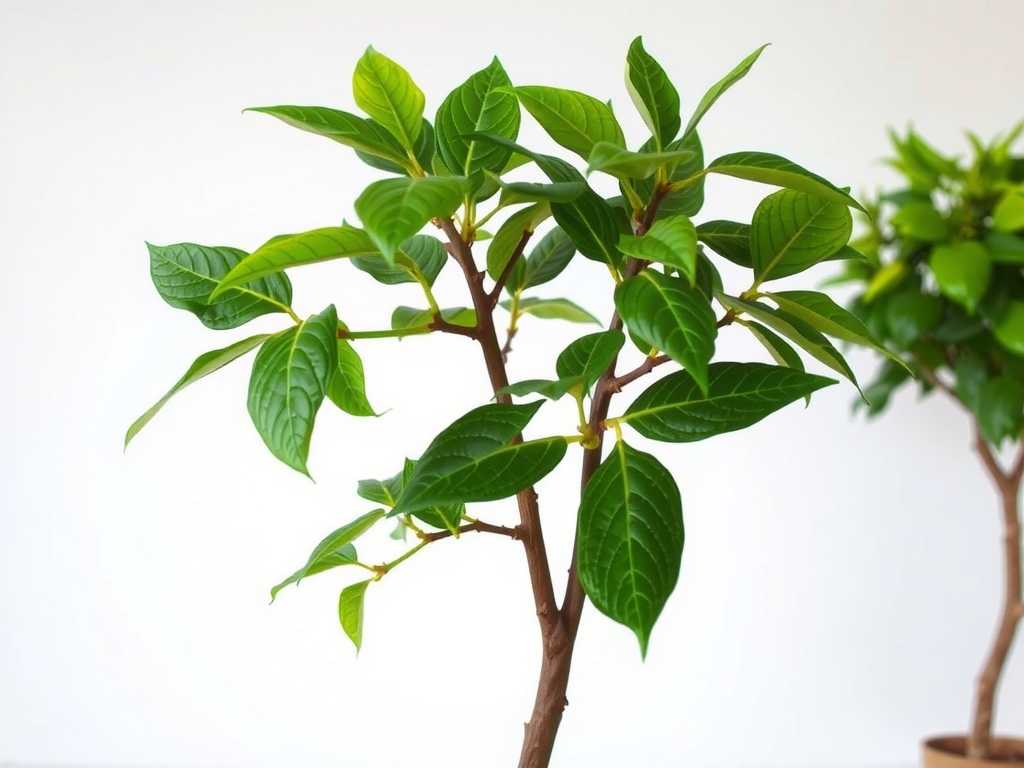
- Bright, Indirect Light is Non-Negotiable: It’s the single biggest factor. The sheer curtain adjustment was essential for quality light without damage.
- Strategic Pruning Guides Growth: You can’t force a green section to become variegated, but you can strategically prune to favor the variegated parts and improve your odds for the next leaf.
Sustaining and Improving Variegation Long-Term
My two-week sprint established a new baseline. For long-term success, I’ve integrated these practices:
- Rotate the Plant: I give the pot a quarter-turn weekly so all sides receive equal light, preventing lopsided growth and ensuring even variegation potential.
- Fertilize with Finesse: I now use a balanced, diluted liquid fertilizer only during the active growing season (spring/summer), and never more than once a month. Less is more.
- Vigilant Monitoring: I inspect weekly for reversion. If a stem persistently produces green leaves, I consider pruning it back more aggressively or even removing it entirely to conserve the plant’s energy for the variegated sections.
Addressing Your Top Money Tree Variegation Questions
Can a reverted all-green Money Tree become variegated again? Unfortunately, no. Once a stem reverts and produces only green leaves, that growth point will not spontaneously regain variegation. Your best course is to prune that stem back to a point where the last variegated leaf emerged. If the entire plant has reverted, it’s unlikely to return to its variegated state.
Is variegation in Money Trees stable, or will it always revert? It is not always stable and reversion is common, primarily due to insufficient light. Variegation is often a chimeric mutation, meaning it can be genetically unstable. By providing optimal, consistent bright indirect light and pruning selectively, you can significantly maintain and increase variegation on your Pachira aquatica, making it as stable as possible.
Are variegated Money Trees more difficult to care for than all-green ones? They can be slightly more demanding. Their reduced chlorophyll makes them more sensitive to low light (causing reversion) and direct sun (causing scorch). They may also grow a bit slower. The care isn’t radically different, but it requires more precision, particularly regarding light placement.
Seeing sharper contrasts and promising new buds after just two weeks was incredibly rewarding. Enhancing variegation isn’t about magic tricks; it’s about understanding the plant’s unique biology and providing the specific conditions it needs to express its beautiful patterns. It requires patience, observation, and a willingness to adjust—like using that sheer curtain. Start by auditing your light situation; it’s almost always the root cause. With consistent, bright indirect light and the courage to prune when necessary, you can guide your Money Tree to showcase its most spectacular, marbled foliage.