admin
admin How to Identify Spider Mite Webbing Deep Inside Dense Money Tree Canopies
If you've ever stared at a money tree (Pachira aquatica) and noticed something faint and fuzzy tucked between those tight, overlapping leaves—something that looks a bit like old cobweb strands but isn't quite a spider web—you're probably dealing with spider mites. I've been there. I've lost two money trees to these tiny pests before I finally figured out how to spot their webbing early enough to do something about it. So let me save you the heartbreak. The trick to identifying spider mite webbing deep inside a dense money tree canopy is to stop looking at the outside of the plant and start inspecting the inner crevices where new growth pushes out of the stem. That's where the mites hide. That's where the webbing starts. And that's where you need to look if you want to catch the problem before it spreads.
Let's talk about what actually works, because the internet is full of vague advice that doesn't help when you're standing there with a flashlight and a magnifying glass, wondering if that tiny speck is dust or a mite.
Why Spider Mites Love Money Tree Canopies
Money trees have a growth habit that's basically a five-star hotel for spider mites. The leaves cluster tightly at the top of each braided trunk. New leaves unfurl right in the middle of that cluster. There's very little airflow in there. It's warm. It's humid in a weird, stagnant way. Spider mites thrive in exactly that kind of environment.
I remember reading a pest management note from the Royal Horticultural Society (RHS) that said spider mites prefer "dry, warm conditions" but also "crowded foliage." That second part gets overlooked. People think mites only show up when the air is dry. But inside a dense money tree canopy, the microclimate stays humid enough for them to breed while the outer leaves shield them from whatever humidity you're adding to the room.
The American Horticultural Society (AHS) has a similar take: dense canopies create "protected microhabitats" where pests go unnoticed. I've seen this firsthand. I had a money tree that looked fine for weeks. Healthy green leaves. No visible webbing. Then one day I moved it to water it and a whole section of inner leaves just… crumbled. The mites had been living in there for who knows how long.
So before we get into the identification steps, here's the real issue: you cannot rely on a quick glance from above. You have to get your hands in there. You have to disrupt the canopy. And you have to know what you're looking for.
My Two-Week Observation Method for Spotting Webbing
I didn't develop this in a lab. I developed it after killing three money trees and finally getting frustrated enough to check my fourth plant every single day for two weeks straight. Here's what I did, and what I found.
Week One: Getting Familiar With the Canopy
On day one, I took a clean white piece of paper and held it under a section of leaves. Then I gently tapped the top of the canopy. If spider mites are present, tiny specks will fall onto the paper. They look like dust, but they move. That's your first clue.
I did this every morning for seven days. By day three, I noticed a few specks on the paper. By day five, I could see faint movement with a cheap 10x jeweler's loupe. By day seven, I could actually see webbing strands starting to form between the leaf stem and the main trunk.
The key here is consistency. You're not going to spot webbing on day one unless the infestation is severe. You need to watch the same spots every day and look for changes.
Week Two: Mapping the Webbing
During the second week, I started using a small flashlight. Not a phone flashlight—those are too diffuse. I used a narrow-beam LED flashlight and shined it at a low angle across the inner canopy. This makes the webbing visible because it catches the light.
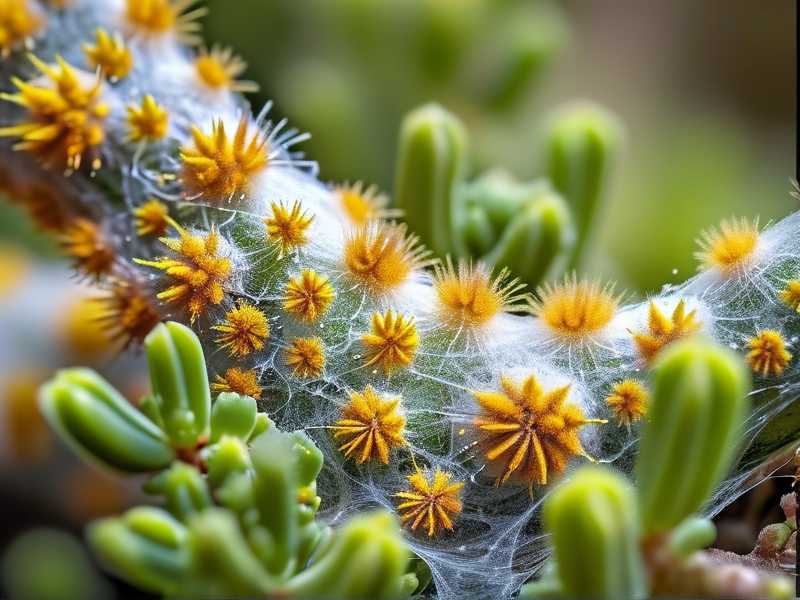
I found that spider mite webbing is not like a spider web you'd see in a corner of your ceiling. It's finer. It's messier. It looks more like a thin layer of lint or dust that's been stretched between two surfaces. I've heard people describe it as "tissue paper strands" and that's pretty accurate.
By day ten, I could see webbing wrapping around the base of new leaf stems. By day twelve, it was spreading to the undersides of older leaves. By day fourteen, I had a clear map of where the mites were concentrated. That map saved my plant because I knew exactly where to treat.
If you skip this two-week observation period, you're guessing. And guessing with spider mites usually means you treat the wrong area and the infestation comes back.
The Three Biggest Mistakes New Growers Make (And I Made All of Them)
I've killed more plants than I care to admit. But the money tree deaths taught me the most. Here are the three mistakes that made my spider mite problems worse, not better.
Mistake One: Overwatering
This is the big one. You've probably heard that "90% of indoor plants die from overwatering." That's true. I've seen it over and over. But when it comes to spider mites, overwatering creates a double problem.
First, overwatering weakens the plant. Weak plants attract pests. Second, overwatering keeps the soil surface moist, which discourages the beneficial predators that might otherwise eat spider mites. I learned this the hard way with my second money tree. I thought I was helping by keeping the soil consistently moist. Instead, I was creating a stress environment that made the mites breed faster.
The fix? Let the top two inches of soil dry out completely before watering. For a money tree in a six-inch pot, that usually means watering every ten to fourteen days, not every week. I use a wooden skewer to check the soil moisture. If it comes out clean and dry, I water. If it's dark and damp, I wait.
Mistake Two: Light Misplacement
I used to think money trees wanted low light. That's what the tag said when I bought it. But after doing more reading, including some grower guides that reference RHS recommendations, I realized that low light actually makes money trees more susceptible to pests. The plant grows slowly. The leaves stay soft. Spider mites love soft, slow-growing tissue.
My third money tree sat in a corner about eight feet from a north-facing window. It grew maybe two new leaves in six months. And it got spider mites worse than any other plant I've owned.
Now I keep my money trees in bright, indirect light. East-facing windows are perfect. If you only have a north window, get a grow light. Since I made that change, my current money tree has grown six new leaves in two months. No mites. Strong leaves. It's a totally different plant.
Mistake Three: Using the Wrong Pot
This one is subtle. I used to repot my money trees into decorative pots without drainage holes. I thought I could just water carefully. I couldn't. Water pooled at the bottom. Roots sat in soggy soil. The plant declined. Mites moved in.
After I killed that plant, I switched to terracotta pots with drainage holes. Terracotta wicks away excess moisture. It's not pretty, but it works. If you want a decorative outer pot, use it as a cachepot and always empty the water that collects at the bottom.
I've also found that pot size matters. A money tree in a pot that's too large will stay wet too long. The roots don't fill the space, so the soil stays soggy. I now use a pot that's just one or two inches wider than the root ball. That's it.
How to Actually Check for Webbing Without Damaging Your Plant
You need to be gentle. Money tree leaves are thin. They tear easily. I've ripped more than one leaf trying to peel back the canopy.
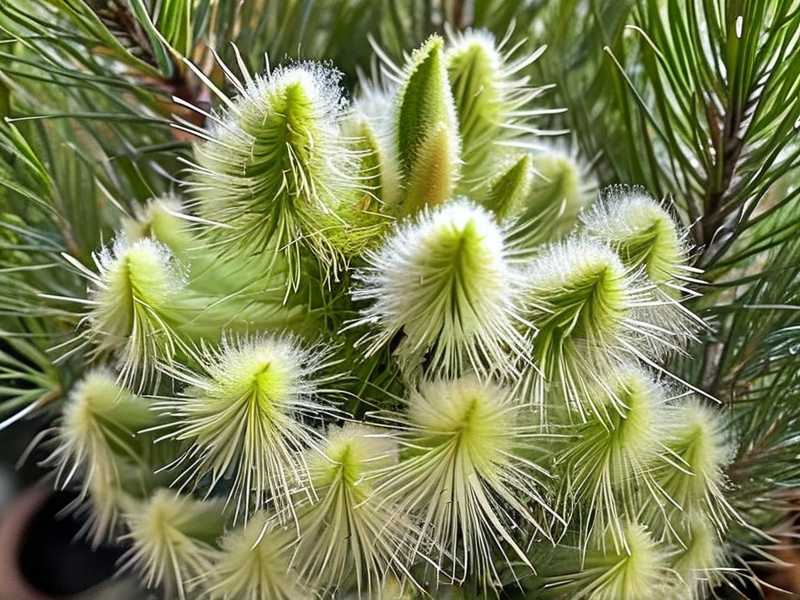
Here's what I do now. I use a soft-bristled artist's brush. I gently push the leaves apart at the top of the canopy. Then I shine my narrow-beam flashlight into the gap. If there's webbing, I'll see it as a faint, silvery, lint-like film between the leaf stems and the trunk.
I also check the undersides of the leaves that are closest to the trunk. Spider mites feed on the underside of leaves. They pierce the leaf and suck out the sap. You'll often see tiny yellow or white speckles on the top of the leaf, and webbing on the bottom.
One more thing: if you see tiny moving specks that are smaller than a grain of salt, those are probably spider mites. If you see tiny white dots that don't move, those could be mite eggs or shed skins. Both are bad news.
What I Do When I Find Webbing
Finding webbing doesn't mean you have to throw the plant away. I've saved two money trees by acting fast.
First, I isolate the plant. Spider mites spread easily. I move the affected money tree to a different room, away from other plants.
Second, I shower the plant. I take it to the bathtub and use a gentle stream of room-temperature water to wash the leaves, especially the undersides. This knocks off a lot of mites and webbing.
Third, I treat with insecticidal soap or neem oil. I spray every four days for three weeks. That breaks the mite life cycle. I focus on the inner canopy where the webbing was thickest.
Fourth, I increase humidity around the plant. Spider mites hate humidity. I set the pot on a tray of pebbles with water. The water evaporates and raises the humidity right around the leaves.
After two weeks of this routine, I check again with my flashlight. If I don't see new webbing, I keep monitoring for another two weeks. If I do see webbing, I repeat the treatment.
A Note on Prevention
The best way to deal with spider mite webbing is to never let it form. I know that sounds obvious, but it's true. And it comes down to three things: proper watering, proper light, and proper air circulation.
I run a small fan near my money tree for two hours a day. Not blowing directly on the plant, but moving the air around it. This makes it harder for mites to establish a colony.
I also wipe down the leaves every two weeks with a damp cloth. This removes dust and lets me inspect the plant at the same time. I've caught early mite activity twice this way before any webbing formed.
And I fertilize lightly. A stressed plant is a pest magnet. A healthy plant can fight off minor infestations on its own. I use a balanced liquid fertilizer diluted to half strength once a month during spring and summer. Nothing during winter.
Frequently Asked Questions
Can spider mite webbing look like dust?
Yes, and that's exactly why so many people miss it. Fresh webbing is thin and silvery. But as it ages, it collects dust and debris. It starts to look like a patch of lint or a bit of fuzz. If you see something that looks like dust but it's strung between two leaf stems, treat it as webbing until proven otherwise.
Do spider mites always make webbing?
Not always. In the early stages, you might not see any webbing at all. You'll see speckled leaves and maybe some tiny moving specks. Webbing usually appears when the population is large enough to need protection. That's why I recommend checking for mites themselves, not just webbing. If you wait for webbing, you're already behind.
What if I only see webbing but no mites?
That can happen. Sometimes the mites have moved on, or they're hiding in a spot you haven't checked. But old webbing means there was an infestation at some point. I'd still treat the plant. Better safe than sorry. I've made the mistake of assuming the mites were gone, only to have them come back two weeks later stronger than before.
A Final Thought
I know this is a lot of detail. But spider mites are one of those problems where the little details matter. You can't just spray and hope. You have to look. You have to watch. You have to be patient for those two weeks.
Your money tree is worth it. That braided trunk took years to grow. The canopy will fill back in if you catch the mites early. I've seen it happen. My current money tree had a mild infestation last spring. I followed the steps I just shared. Today it has eight new leaves and no webbing. It's the healthiest it's ever been.
So grab a flashlight. Grab a piece of white paper. Start checking. Your plant will thank you.