admin
admin How to Maintain Humidity for a Money Tree Indoors: A Plant Lover's Practical Guide
You’ve brought home a beautiful Money Tree, drawn by its braided trunk and lush, green canopy promising prosperity and calm. You find the perfect spot with bright, indirect light, you master a careful watering routine, and yet… something’s off. The leaf tips begin to turn crispy brown. A few leaves yellow and drop, despite your best efforts. You might even notice new growth is stunted or emerging with dry, brown edges. If this sounds familiar, you’re likely battling the silent, invisible challenge of indoor humidity—or the lack thereof. I’ve been there, watching my prized Pachira aquatica struggle in my arid living room, and it’s a frustrating feeling. The truth is, while Money Trees are famously resilient, they are tropical natives that thrive in humid environments. Our climate-controlled homes, especially during winter or in dry climates, often create a desert-like atmosphere for these moisture-loving plants. This guide isn’t just theory; it’s the culmination of my own two-week experiment to transform my Money Tree’s health by mastering indoor humidity. I’ll walk you through exactly what I did, what worked, what failed, and how you can achieve lush, vibrant growth for your own plant.
Understanding Your Money Tree's Humidity Needs
First, let’s talk numbers. Money Trees prefer a relative humidity level of 50% or higher. For context, many homes, particularly when heating or air conditioning is running, sit at a mere 30-40%. This discrepancy is the root cause of those dry, brown leaf tips—a condition called leaf scorch. It’s the plant’s literal cry for more atmospheric moisture. I started my journey by purchasing a simple, inexpensive hygrometer. Placing it near my Money Tree was an eye-opener; my room hovered at a dismal 35%. This objective data, as emphasized by resources from the Royal Horticultural Society (RHS), is crucial. You can’t manage what you don’t measure. The American Horticultural Society (AHS) also notes that adequate humidity is key for proper transpiration and nutrient uptake, preventing stress that makes plants vulnerable to pests like spider mites, which thrive in dry conditions.
My 2-Week Humidity Rescue Plan: Methods and Results
Armed with the knowledge of my low baseline, I committed to a 14-day plan to raise and stabilize the humidity around my Money Tree. I tested three core methods, tracking progress daily with my hygrometer and photographing the plant every other day.
Week 1: Implementing the Basics
My initial approach focused on three simple, popular techniques.
- The Pebble Tray Method: This was my first and most constant intervention. I took a wide, shallow tray, filled it with a layer of pebbles, and added water until it sat just below the top of the stones. I then placed my Money Tree’s pot on top of the pebbles. The idea is that as the water evaporates, it creates a localized humid microclimate. The result? It provided a modest but steady boost. My hygrometer showed a consistent 5-8% increase directly around the plant, bringing the zone to about 40-43%. It’s a passive, low-maintenance solution, but I learned the pot must not sit in the water to avoid root rot.
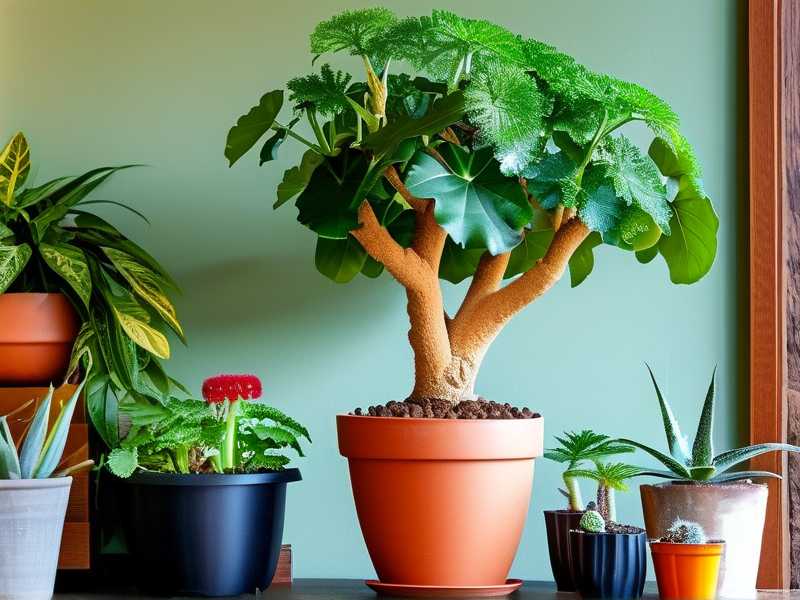
- Strategic Grouping: I moved my Money Tree to a shelf alongside my Peace Lily and a few ferns. Plants release moisture through transpiration, and grouping them together allows them to create a shared, more humid environment. The result? This synergized well with the pebble tray. The collective transpiration seemed to amplify the effect, and the area felt noticeably fresher. The hygrometer reading gained another 2-3%, hitting 45% in that corner.
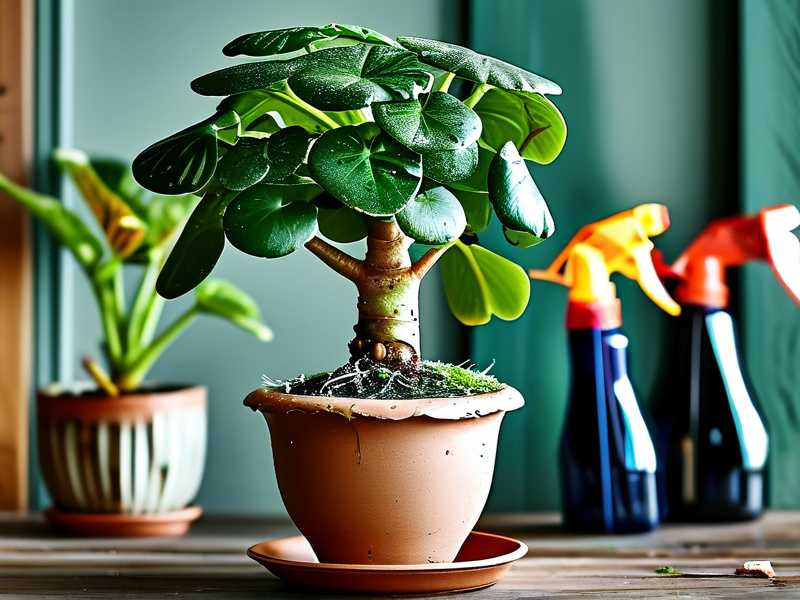
- Regular Misting: Every morning, I used a fine mist spray bottle to lightly mist the foliage of my Money Tree. The result? This is where I hit my first major “pitfall.” While the mist provided a temporary spike in humidity, it evaporated within 30 minutes. More worryingly, by day 5, I noticed the beginnings of a white, powdery residue on some leaves—a potential sign of mildew from constant wet foliage in stagnant air. I immediately stopped daily misting. As the RHS advises, misting is of limited long-term value and can promote fungal diseases if overdone, especially without good air circulation. I shifted to a light mist only once or twice a week, ensuring the leaves dried quickly.
End of Week 1 Observation: The leaf tips had stopped getting worse, but no dramatic improvement was visible yet. The new growth still looked slightly tight and pale.
Week 2: Introducing a Humidifier
For the second week, I introduced a game-changer: a small, cool-mist ultrasonic humidifier. I placed it about three feet away from my plant grouping, setting it to maintain a 55% humidity level in the room.
- The Humidifier Effect: The difference was almost immediate. Within two days, the hygrometer steadily read between 52-55%. The air in the room felt more comfortable for me as well. This method, as supported by AHS recommendations for tropical plants, provides the most consistent and controllable humidity.
- The Transformation: By day 10, the change in my Money Tree was undeniable. The existing leaves looked plumper and had a deeper, glossier green sheen. Most excitingly, the new spear of growth that had been stalled began to unfurl rapidly. By day 14, it had opened into a perfect, healthy leaf with no brown edges whatsoever. The older, slightly crispy tips remained (they always will), but the plant’s overall vitality was transformed.
Key Lessons and Troubleshooting from My Experiment
My two-week journey taught me more than any generic guide could.
- Consistency Over Spikes: Brief interventions like occasional misting are almost useless. Money Trees need stable, sustained humidity. The pebble tray and, most effectively, the humidifier provided this.
- Airflow is Non-Negotiable: While raising humidity, good air circulation is vital to prevent mold, mildew, and pests. I made sure the room was not hermetically sealed and occasionally ran a ceiling fan on low. This allowed the humid air to circulate without creating stagnant, wet pockets.
- The Pitfall of Over-Correction: In my initial enthusiasm, I considered placing my Money Tree in the bathroom for constant steam. However, most bathrooms lack the sustained, bright indirect light the plant needs. You must balance all care factors—light, water, humidity—not maximize one at the expense of another.
- Monitor for Pests: Dry, stressed plants attract spider mites. As my plant recovered, I kept a close eye on the undersides of leaves. The improved humidity itself acts as a deterrent, but vigilance is key.
Maintaining Optimal Moisture Levels Long-Term
Based on my successful experiment, here is my sustained care routine for maintaining perfect humidity for an indoor Money Tree.
- Primary Tool: The Humidifier. This is now a permanent part of my plant care arsenal, especially from fall through spring. I use distilled water to prevent mineral dust and clean it weekly to prevent bacterial buildup.
- Essential Support: The Pebble Tray. It remains under the pot as a reliable backup, adding that extra localized boost. I refresh the water every few days.
- Occasional Boost: Light Misting. I now only mist lightly on very hot days or if I notice dust on the leaves, always in the morning so leaves dry by nightfall.
- The Golden Rule: Keep Measuring. My hygrometer stays on the shelf. It’s a small device that provides immense peace of mind, allowing me to adjust the humidifier settings with the changing seasons.
How often should I mist my Money Tree for humidity? Based on my experience, I don’t rely on misting as a primary humidity source. It offers a very temporary boost and can cause leaf issues if overdone. I might mist lightly once a week at most, focusing more on the pebble tray and humidifier for real results.
Can I put my Money Tree in the bathroom for humidity? You can, but only if your bathroom has a window that provides plenty of bright, indirect light. Money Trees cannot thrive in low-light conditions, even with perfect humidity. A better solution is to improve the humidity in the location where the light is already ideal.
What are the clear signs my Money Tree needs more humidity? The most common signs are dry, brown crispy tips on the leaves, yellowing leaves that drop, and stunted or deformed new growth that emerges with brown edges. If you see these signs and your watering is correct, low humidity is the likely culprit. A hygrometer will confirm it.
Mastering humidity was the final piece of the puzzle in my Money Tree care routine. It moved my plant from merely surviving to visibly thriving. The journey from dry, stressed foliage to lush, resilient growth took focus and a slight adjustment to my environment, but the payoff was immense. By understanding your plant’s true needs, measuring your conditions, and implementing a consistent strategy—whether it’s a simple pebble tray or a dedicated humidifier—you can recreate a slice of the tropical habitat your Money Tree loves. The result is a healthier, happier plant that not only symbolizes prosperity but truly embodies it with every vibrant new leaf.