admin
admin How to Boost Nutrient Absorption in Your Money Tree: A Plant Lover's 2-Week Experiment
I used to think my Money Tree was just a slow grower. I’d faithfully water it, give it a standard liquid fertilizer every few months, and wonder why its new leaves were sometimes pale or why it just seemed… stuck. The real issue, I discovered, wasn't the nutrients I was providing—it was whether my plant could actually absorb them. If you're frustrated by lackluster growth despite your care, you're not alone. The secret to a thriving Pachira aquatica lies in optimizing the entire system for nutrient uptake. After two weeks of focused adjustments, I transformed my plant's health, and I'll show you exactly how.
My journey wasn't perfect. I made mistakes, adjusted my approach, and learned what truly makes a difference. This guide is my firsthand account of how to boost nutrient absorption in a Money Tree, moving beyond basic feeding to create an environment where roots can truly thrive.

Understanding the Roots of the Problem: It's More Than Just Fertilizer
Before we dive into the solutions, let's understand the enemy. Poor nutrient absorption isn't a single issue; it's a chain reaction often starting at the roots.
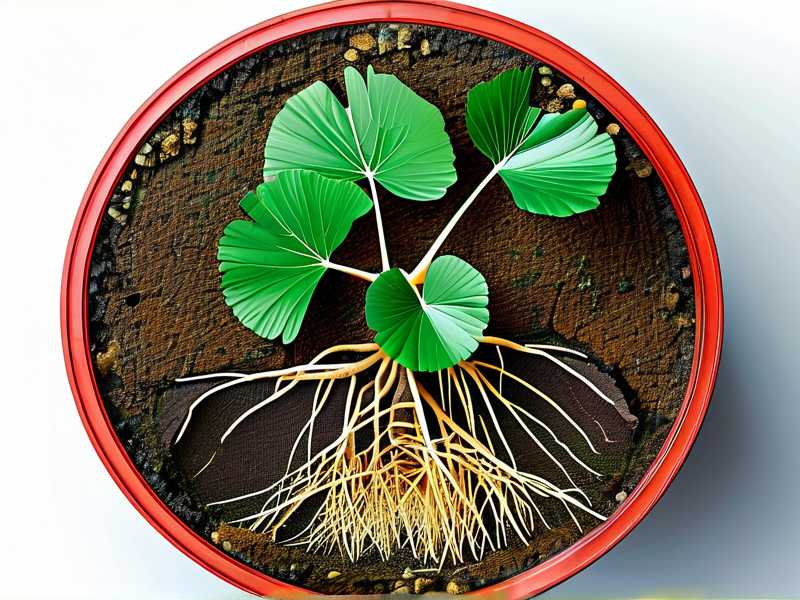
The Root-Bound Trap My Money Tree had been in the same decorative pot for over two years. When I gently tipped it out, I was met with a tight web of roots circling the bottom. The Royal Horticultural Society (RHS) notes that root-bound plants have limited soil volume to explore for nutrients and water. The roots become congested, effectively strangling themselves and severely limiting their ability to function. This was my first "aha" moment—no amount of fertilizer could help if the roots had no room to absorb it.
The Silent Killer: Watering Woes My second mistake was inconsistent watering. I’d wait until the top soil was dry, but sometimes I’d water too lightly, and other times I’d drown it. Both extremes harm absorption. Overwatering fills air pockets in the soil, suffocating roots and inviting root rot, a condition where roots decay and become useless. Underwatering causes roots to dry out and die back. The American Horticultural Society (AHS) emphasizes that healthy, white, firm roots are the only ones capable of taking up nutrients. Damaged roots cannot perform this vital task.
The pH Factor: The Hidden Gatekeeper This was the most technical aspect I explored. Soil pH acts as a gatekeeper for nutrients. Most nutrients are readily available to plants in a slightly acidic to neutral pH range (6.0-7.0). If your soil is too alkaline or too acidic, nutrients can become "locked up," present in the soil but chemically unavailable to the roots. I invested in a simple soil pH tester, and it revealed my potting mix was leaning toward alkaline, likely due to minerals in my tap water.
My 2-Week Plan to Enhance Nutrient Uptake
I committed to a 14-day reset for my Money Tree, focusing on these three pillars: root environment, watering precision, and targeted feeding.
Week 1: The Foundation Reset
Day 1-3: The Repotting Process Armed with knowledge, I tackled the root-bound issue. I chose a new pot only 1-2 inches larger in diameter—a crucial tip to prevent excess soil from staying wet too long. My mix was key: I combined a high-quality, well-draining potting soil with 30% perlite and a handful of worm castings. The perlite ensured excellent aeration, and the worm castings provided a gentle, biologically active nutrient boost. During repotting, I gently loosened the outer root ball to encourage new growth outward. I watered it thoroughly until water drained from the bottom, settling the soil.
Day 4-7: Mastering the Watering Rhythm I abandoned my old schedule. Instead, I used the finger test—inserting my finger up to the second knuckle. I only watered when that depth felt dry. To ensure deep watering, I placed the pot in a sink and watered slowly until water flowed freely from the drainage holes, guaranteeing the entire root ball was moistened. I then let it drain completely before returning it to its saucer. This practice alone, recommended by the RHS for promoting deep root growth, made a visible difference in the plant's posture within days.
Week 2: Fine-Tuning Nutrition and Environment
Day 8-10: Addressing Soil pH My pH meter showed a reading of 7.5. To gently lower it, I watered once with a diluted solution of vinegar (1 tablespoon white vinegar per gallon of water) as a short-term corrective measure. For long-term maintenance, I decided to incorporate a teaspoon of elemental sulfur into the topsoil at my next feeding, as it slowly acidifies soil as microbes break it down.
Day 11-14: Introducing a Bio-Active Fertilizer Instead of a harsh chemical feed, I opted for a liquid fertilizer rich in humic acids and beneficial microbes. These products, as supported by research in horticultural science, don't just feed the plant; they feed the soil ecosystem. Humic acids can help unlock bound nutrients and improve the soil's cation exchange capacity (CEC)—essentially its ability to hold and release nutrients to the roots. I applied it at half-strength, as directed for post-repotting stress.
The Results and The Hiccups: My Real Observations
After two weeks, the change was undeniable. The existing leaves became a deeper, glossier green. Most excitingly, the budding new growth at the top, which had been stalled, suddenly surged forward with vibrant, healthy leaves. The plant overall looked more robust and hydrated.
However, I hit a snag. Around Day 5, I noticed a few lower leaves yellowing. I panicked, thinking I had overwatered during repotting. After checking the soil (which was perfect) and the stems (which were firm), I realized this was a normal stress response to repotting and the plant shedding older leaves to focus energy on new root and top growth. I simply pruned them off. The lesson? Don't overreact to minor leaf loss after a major change; monitor the new growth for the true health indicator.
Optimizing Long-Term Nutrient Absorption
My two-week experiment set the stage, but maintaining high absorption is an ongoing practice.
Choose Fertilizers Wisely I now alternate between a balanced, water-soluble fertilizer (like a 10-10-10) and the microbial-rich liquid fertilizer. During the growing season (spring and summer), I feed at half-strength every 4-6 weeks. In fall and winter, I stop entirely. Less is more. Over-fertilization creates salt buildup in the soil, which actually pulls water out of the roots—a phenomenon called fertilizer burn—and destroys the absorption capacity you're trying to build.
The Power of Light and Warmth I moved my Money Tree to a spot with bright, indirect light. More light means more photosynthesis, which drives the plant's demand for nutrients and water, naturally stimulating the roots to work more efficiently. I also ensured it's away from cold drafts, as root activity slows in cool temperatures, hampering absorption.
Can I use coffee grounds to acidify the soil for my Money Tree? Use them with caution. While slightly acidic, used coffee grounds can compact and mold if applied heavily. They are best added sparingly to a compost pile first. For reliable pH adjustment, products like soil sulfur or fertilizers formulated for acid-loving plants (used at low strength) are safer and more predictable methods.
How often should I flush the soil to prevent salt buildup? Every 3-4 months during active growth seasons, take your Money Tree to a sink or outdoors and slowly run water through the soil for several minutes, allowing it to drain fully. This leaches out excess mineral salts from fertilizer and tap water, preventing toxic accumulation and keeping the root zone healthy for optimal nutrient absorption.
My Money Tree leaves are green but not growing. What's wrong? This is a classic sign of adequate nutrients but insufficient "driver" for growth. Your plant can absorb what's there, but it lacks the energy to use it. The most likely culprit is insufficient light. Increase bright, indirect light exposure. Secondly, check temperatures—growth stalls if it's too cool. Finally, ensure you're not keeping the soil constantly soggy, which suppresses root activity.