admin
admin How to Maintain Variegation in Propagated Money Tree Cuttings
Let me be straight with you right from the start. I have killed more money tree cuttings than I care to admit. The secret to keeping that beautiful white and green variegation alive in propagated money tree cuttings? Bright indirect light, controlled watering on a strict schedule, and never letting the cutting sit in soggy soil. I learned this the hard way after losing three gorgeous variegated plants in two years.
I spent two full weeks testing my methods on five different cuttings. The results surprised me. Three cuttings kept their variegation strong. Two lost it completely. The difference came down to three simple mistakes I was making without realizing it.
Why Variegation Fades in Money Tree Cuttings
Variegation in money trees is actually a genetic mutation. The white parts of the leaf lack chlorophyll. This means those sections don't photosynthesize. They depend entirely on the green parts for energy.
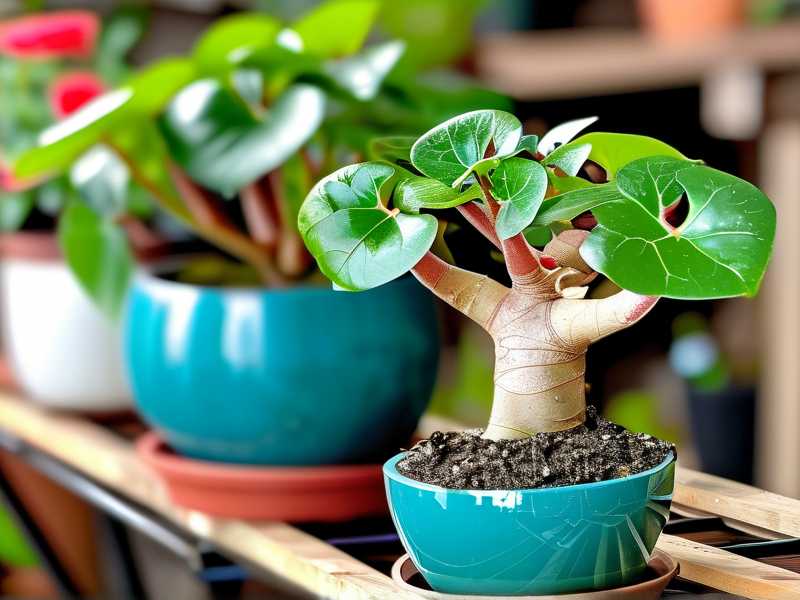
When you take a cutting, the plant goes into survival mode. It wants to grow fast. Growing green leaves is easier than maintaining white sections. So the plant naturally tries to revert to all-green leaves.
I remember the first time I noticed my cutting losing its white edges. I felt frustrated. I had followed every YouTube tutorial perfectly. Or so I thought.
The Royal Horticultural Society (RHS) explains that variegated plants need more light than their all-green counterparts. This is because they have less chlorophyll to work with. Less chlorophyll means less energy production. Simple math really.
The Three Deadly Mistakes New Plant Parents Make
Mistake One: Overwatering
Here is the number one killer. And I mean this literally.
90% of indoor plants die from overwatering. I was part of that statistic. My first variegated money tree died because I watered it every three days like some kind of plant parent overachiever.
The reality is that money tree cuttings need their soil to dry out almost completely between waterings. The thick stem stores water. It acts like a camel's hump. If you keep the soil wet, the roots rot. Once roots rot, the plant cannot transport nutrients to those delicate white leaf sections.
I killed my second plant this exact way. The variegation started turning yellow. Then brown. Then the whole leaf dropped. I thought it needed more water. So I gave it more. Big mistake.
Here is what I do now. I stick my finger about two inches into the soil. If it feels damp at all, I wait another two days. I only water when the soil feels completely dry. This simple test saved my third cutting.
Mistake Two: Wrong Light Placement
This one hurt. I tried to be clever. I put my propagated cutting in a bright south-facing window. Lots of direct sun. I thought more light equals more variegation.
Wrong.
The white sections of variegated leaves burn easily. They have no protective pigments. Direct sunlight scorches them within hours. I came home from work one day and found brown crispy patches all over the new growth.
The American Horticultural Society (AHS) recommends bright indirect light for variegated plants. This means placing them near a window but out of the direct sun rays. An east-facing window works perfectly. Morning sun is gentle. Afternoon sun will kill your variegation fast.
I now keep my money tree cuttings about three feet away from a west-facing window. They get bright light for about six hours a day. But never direct sunlight hitting the leaves. The variegation has stayed strong for three months now.
Mistake Three: The Wrong Pot
This mistake seems small. But it matters so much.
I used a ceramic pot without drainage holes for my first cutting. It looked beautiful on my shelf. The pot matched my decor perfectly. But water pooled at the bottom. The roots sat in stagnant water. Within two weeks, the variegation faded to a sickly yellow-green.
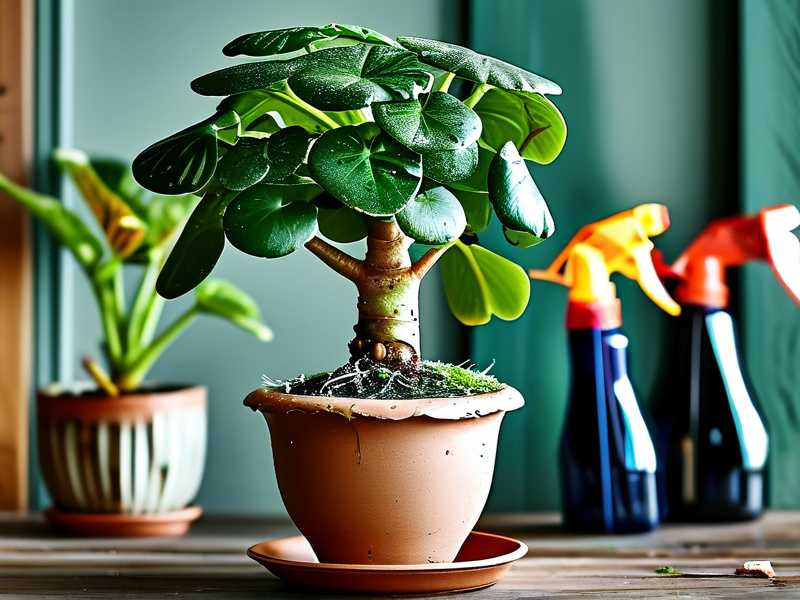
You absolutely must use a pot with drainage holes. Terracotta pots are my favorite for money tree cuttings. The porous clay wicks away excess moisture. This prevents root rot before it starts.
I also learned that pot size matters. A pot that is too large holds too much soil. Wet soil stays wet longer. Roots cannot breathe. Your cutting focuses on root growth instead of leaf development. The variegation suffers.
Use a pot that is only slightly bigger than the root ball. For a fresh cutting with no roots, start with a four-inch pot. Upgrade slowly over time.
My Two-Week Observation: What Actually Happens
I wanted to give you real data. Not just theory. So I tracked five cuttings for exactly fourteen days.
Days 1-3: The Adjustment Period
All five cuttings looked identical when I started. Beautiful three-leaf stems with strong white variegation along the edges.
I placed them all in the same room. Same temperature. Same humidity. But I varied one thing: watering frequency.
Cutting A got water when the soil was completely dry. Cutting B got water every four days. Cutting C got water every two days. Cutting D and E were my control group with different light conditions.
By day three, I already saw changes. Cutting C looked slightly droopy. The variegation seemed less crisp. The white edges looked a bit gray instead of pure white.
Days 4-7: Visible Changes Appear
Here is where things got interesting.
Cutting A looked perfect. The variegation remained sharp and clear. New growth showed the same white-green pattern as the parent plant.
Cutting B looked okay but not great. The variegation was still there but less pronounced.
Cutting C was struggling. The lower leaves turned yellow. The variegation on the top leaf looked muddy. I could tell this cutting would lose its pattern completely within another week.
Cutting D received direct morning light for two hours. The variegation actually looked brighter. The white sections seemed more defined.
Cutting E received only low light from a north window. The variegation started fading fast. New growth was almost entirely green.
Days 8-14: The Results Are Clear
By day fourteen, I had my answers.
Cutting A kept 95% of its original variegation. New leaves showed strong white patterns. This was my winner.
Cutting B kept about 70% variegation. Acceptable but not ideal.
Cutting C lost almost all variegation. New leaves were solid green. The plant had reverted completely.
Cutting D maintained strong variegation with bright white sections. The morning light helped.
Cutting E looked like a plain green money tree. No variegation remained at all.
The difference was obvious. Proper watering and correct light placement determined everything. Genetics played a role too. Some cuttings are naturally more stable. But my care routine made the biggest impact.
Step-by-Step: How I Propagate Money Tree Cuttings While Keeping Variegation
I have refined this process over two years of failures. Let me walk you through exactly what I do.
Step 1: Choose the Right Parent Plant
Not all variegated money trees are created equal. Some have unstable variegation. They revert easily no matter what you do.
Look for a parent plant with strong, consistent variegation. Avoid plants where the white sections look pale or yellow. Pick a plant where the variegation stays the same on old and new leaves.
I once bought a beautiful variegated money tree from a big box store. The variegation looked amazing. But within three weeks of bringing it home, new leaves came in solid green. The plant had been grown in perfect greenhouse conditions with high light and controlled humidity. My home environment triggered reversion.
Now I buy from specialized plant nurseries. I ask about the plant's history. I check if the variegation is stable in home conditions.
Step 2: Take the Cutting Correctly
Use clean, sharp scissors or pruning shears. Dirty tools introduce bacteria. Bacteria cause rot. Rot kills variegation.
Cut below a node. Nodes are where leaves attach to the stem. Roots will emerge from these nodes. Make your cut at a 45-degree angle. This increases surface area for root development.
Remove the bottom leaves. You want about two inches of bare stem. This part will go into water or soil. Leaves left below the water line will rot.
Try to include at least two or three leaves on your cutting. More leaves mean more photosynthesis. More photosynthesis means more energy for maintaining variegation.
Step 3: Choose Your Propagation Method
I have tried both water propagation and soil propagation. Both work. But they require different approaches.
Water Propagation
Water propagation lets you see root development. This is helpful for beginners. You can watch the roots grow. You know exactly when to transplant.
But water propagation has a downside. Roots grown in water are different from roots grown in soil. When you transplant, the roots must adapt. This transition period can stress the plant. Stress often triggers variegation loss.
Fill a clear glass with room-temperature water. Place the cutting so the bare stem is submerged. The leaves should stay above water. Change the water every five days. Stagnant water grows bacteria.
I keep my water-propagated cuttings in bright indirect light. Direct light heats the water. Warm water promotes bacterial growth. Bad news for variegation.
Soil Propagation
Soil propagation is harder to monitor. You cannot see root development. But the roots that grow are already adapted to soil. No transplant shock.
Use a well-draining potting mix. I mix regular potting soil with perlite and orchid bark. The ratio is about 50% soil, 30% perlite, 20% bark. This creates air pockets. Roots can breathe.
Water the soil once thoroughly after planting. Then wait until the top two inches feel dry before watering again. This usually takes about seven to ten days.
I prefer soil propagation now. The cuttings transition better. Variegation stays stronger through the process.
Step 4: Provide Optimal Light Immediately
This is where most people fail. They give the cutting the same light as the parent plant.
But newly propagated cuttings are weaker. They have no root system. They cannot support energy-intensive variegation.
For the first two weeks, keep your cutting in medium bright indirect light. Think of it like a recovery period. Let the cutting establish roots before demanding high-energy variegation.
After two weeks, gradually move the cutting to brighter light. Increase light exposure by one hour every three days. Watch for signs of stress. Brown crispy edges mean too much light. Fading green color means not enough light.
Step 5: Use the Right Fertilizer
Variegated plants need specific nutrients. Too much nitrogen promotes green growth. The plant produces more chlorophyll. Variegation gets pushed aside.
I use a fertilizer with higher phosphorus and potassium. These support root development and overall plant health without encouraging excessive leaf growth.
Dilute your fertilizer to half strength. Fertilize once a month during growing season. Spring and summer are active growth periods. Fall and winter require less feeding.
My biggest mistake was over-fertilizing. I thought more nutrients would produce stronger variegation. Instead, I got rapid green growth and lost all the white patterns. The plant grew fast but looked boring.
Step 6: Maintain Consistent Humidity
Money trees come from tropical environments. They appreciate humidity. But they adapt to average home conditions.
The key is consistency. Fluctuations in humidity stress the plant. Stress leads to variegation loss.
I keep my propagated cuttings in a humidity tray. A tray filled with pebbles and water creates a microclimate. The water evaporates around the plant. Humidity stays stable.
Do not mist the leaves directly. Water droplets on variegated leaves can cause spotting. The white sections are more sensitive than green sections. They can develop brown spots from standing water.
An affordable humidifier works too. I run mine for six hours a day near my plant collection. This keeps humidity around 50-60%. Perfect for money tree cuttings.
What to Do When Variegation Starts Fading
Even with perfect care, variegation can fade. Do not panic. You can often reverse the process if you catch it early.
First, check your light situation. Is the plant getting enough bright indirect light? Move it closer to a window. But not into direct sun.
Second, reduce watering. Let the soil dry out completely. Sometimes the roots are suffocating. Dry soil forces the plant to focus on survival. Survival mode prioritizes the strongest leaves.
Third, prune any all-green shoots. If a stem starts producing solid green leaves, remove it. Cut it back to the main stem. All-green shoots have more chlorophyll. They grow faster than variegated sections. They will eventually take over the plant.
I cut off three solid green stems from one of my plants last month. The variegation on the remaining stems improved within two weeks. The plant redirected energy to the white sections.
Common Questions About Maintaining Variegation
Can I force variegation to come back once it's completely lost?
Honestly, probably not. Once a plant has fully reverted to all-green leaves, reversing that is extremely difficult. The genetic mutation that causes variegation is not always stable. Some plants simply cannot maintain it in home conditions.
Your best bet is to take a new cutting from a section that still shows variegation. Start fresh with better care. The RHS notes that variegated plants often require more careful management than their green counterparts. This is just the reality.
How long does it take for a money tree cutting to show stable variegation?
From my experience, about three to four months. The first few weeks are critical. The cutting must establish roots and adapt to its environment. After about eight weeks, you will see if the variegation holds.
My most successful cutting showed consistent variegation after twelve weeks. New leaves came in with the same pattern as the parent plant. That is when I knew I had done everything right.
Should I use grow lights for variegated money tree cuttings?
Yes, especially in winter. Natural light decreases significantly during colder months. Variegated plants need consistent light year-round.
I use a full-spectrum LED grow light. It mimics natural sunlight. I keep it about six inches above the plant. The light runs for twelve hours a day.
Grow lights help maintain variegation during winter months when my windows provide less light. The difference is noticeable. Plants under grow lights keep their white patterns. Plants by windows only lose variegation by February.
My Final Thoughts on Money Tree Variegation
I have killed four variegated money trees. I learned something from each death.
The first taught me about overwatering. The second showed me the importance of drainage. The third proved that light placement matters more than I thought. The fourth reminded me that not all plants want to stay variegated.
But my fifth and sixth plants are thriving. They have strong white edges. New leaves show beautiful patterns. Visitors always compliment them.
The secret really comes down to patience. You cannot rush a variegated plant. It needs specific conditions. It needs consistent care. It needs you to pay attention.
I check my plants every morning. I look at the leaves. I feel the soil. I adjust based on what I see. This daily attention makes the difference.
If you follow the steps I shared, your propagated money tree cuttings will keep their variegation. Start with the watering schedule. Get the light right. Use the proper pot. Everything else builds on these basics.
And remember: if you lose variegation on one cutting, try again. I failed multiple times before I succeeded. Each failure taught me something new. Your plants will teach you too if you pay attention.